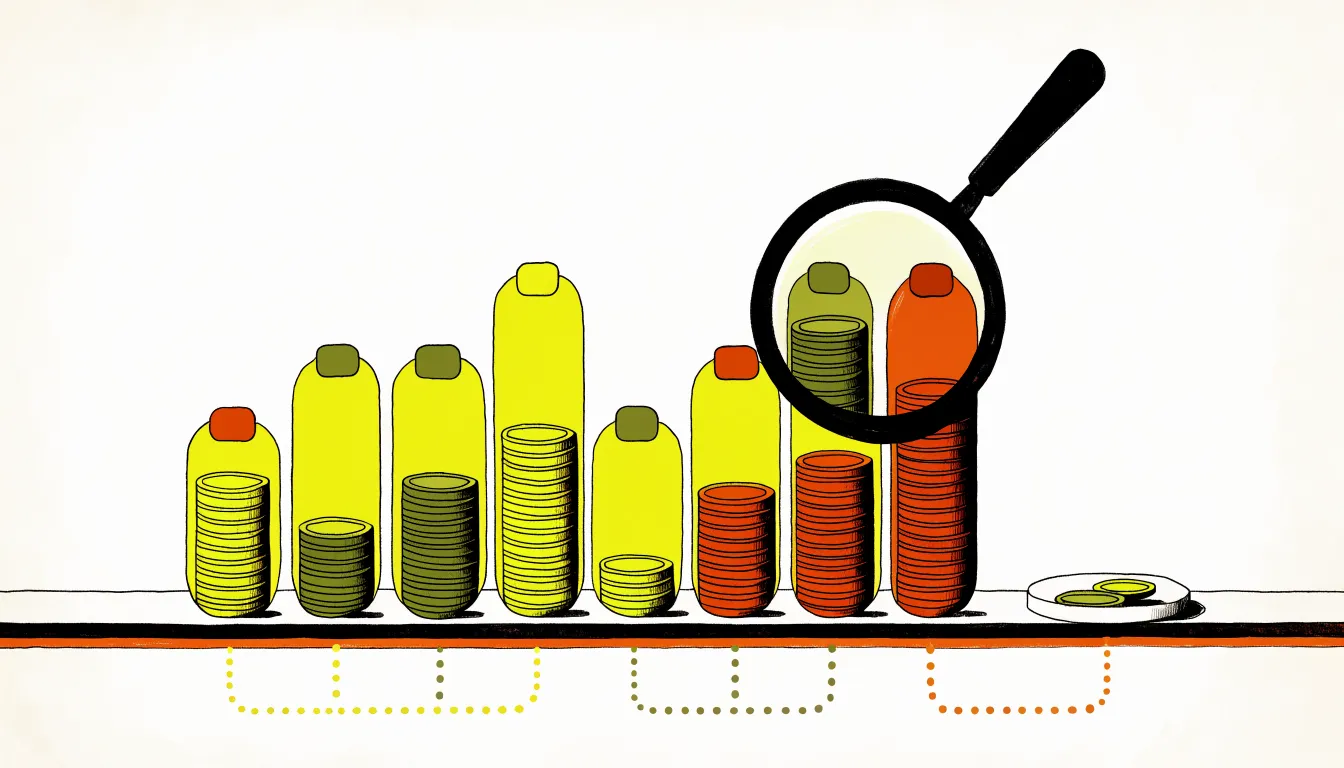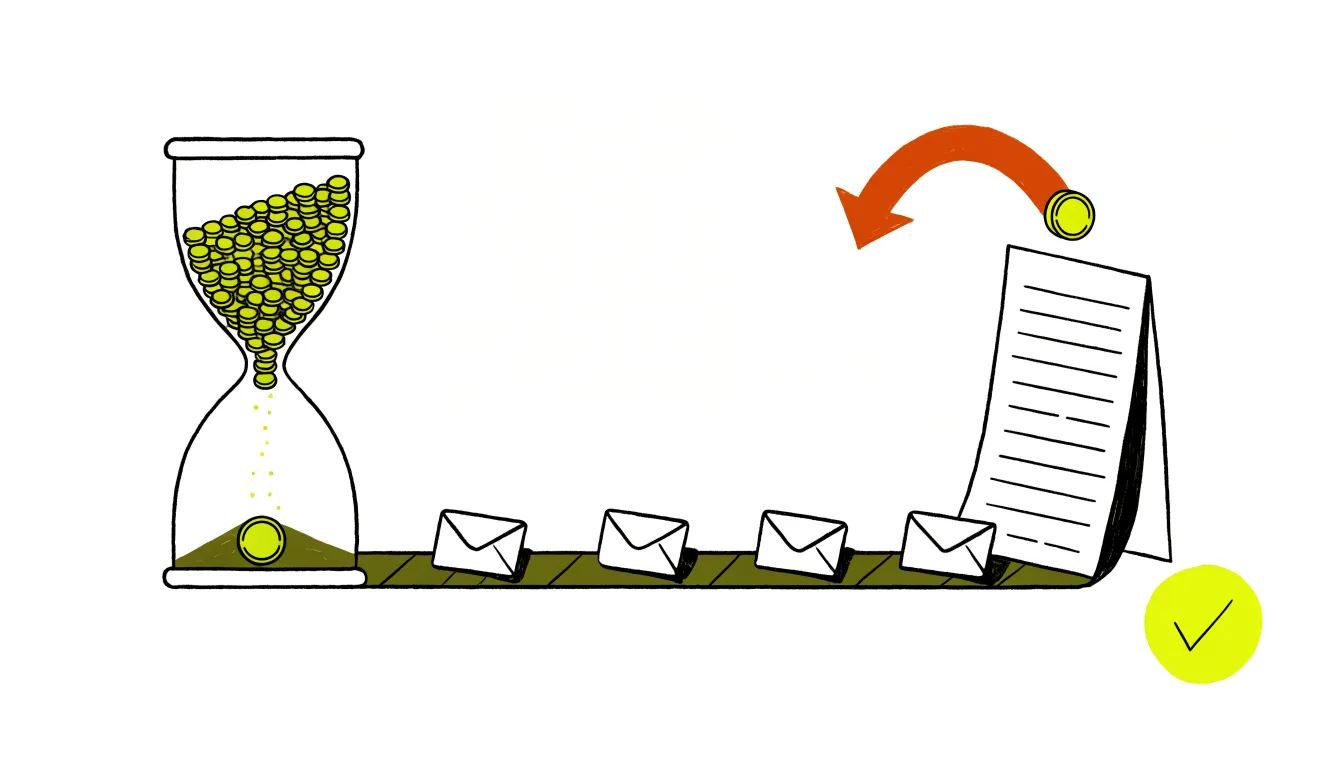

If you run a creator agency or keep its books, here is what to include on a creator agency invoice: the parties, the split and dates it covers, the earnings your percentage applies to, the math, any carryover, one total, a due date and the ways to pay. The test is simple. A creator should be able to check every number without messaging you.
An invoice to a creator is not a normal service bill. It does not charge for hours or deliverables. It charges a share of what the creator earned on a platform. So most of its job is showing where each number came from.
What every invoice to a creator should show
A clear invoice shows these items, from top to bottom:
- Your agency's legal name, the creator's legal name and an email for each
- A unique invoice number and the date you issued it
- The split, page or account the invoice bills
- The billing period, with a start date and an end date
- The earnings figure your percentage applies to, and its source
- The rate and the calculation, line by line
- Carryover and adjustments, each on its own line
- One total and one due date
- The ways to pay and what each one costs
- The name the charge will show on the creator's bank statement
- A contact for questions about any line
Start with the parties, the split and the dates
Put your agency's legal business name at the top, then the creator's legal name. Add a unique invoice number and the issue date. Then name the split, page or account this invoice bills. A creator with three pages should never have to guess which one you mean.
Your invoice is a record for the creator, not only for you. The IRS guide to business records says expense documents should identify the payee, the amount paid, proof of payment, the date incurred and a description of the service received. It lists invoices among those documents.
Next, state the billing period with a start date and an end date, and say which time zone the dates use. Melon's charge schedule article says every schedule boundary falls at midnight UTC, so a charge dated Monday is generated on Sunday evening Pacific time. A one-line note saves the creator from asking why a Monday charge appeared on Sunday.
Show the earnings your percentage applies to
This is the line the whole invoice rests on. Name the platform account the figure came from, then say what kind of figure it is.
- Earnings or withdrawals. Melon's guide to cash-out and earnings splits explains the difference. An earnings split grows daily from the creator's net platform revenue. A cash-out split grows when the creator takes money off the platform.
- Gross or net. Say which one your percentage applies to, in the same words your agreement uses.
- The start date. In Melon, the start date decides when accrual begins, and nothing earned before it counts toward the split. Your invoice should never reach back past it.
For cash-out billing, list each withdrawal with its date and amount. For earnings billing, one figure per page per period works, as long as the creator can match it to their platform dashboard.
Write out the percentage math
Show the rate and the calculation, not only the result. A creator who can redo the math has no reason to ask you for it.
A flat rate takes one line. Melon's overview uses this example: a creator earns $1,000 on a 30% split, and Melon charges them $300.
Tiered rates need one line per tier. In Melon's tiered rate example, an agency takes 30% from $0 and 20% from $10,000. A creator who earns $15,000 in a month owes:
- 30% on the first $10,000: $3,000
- 20% on the remaining $5,000: $1,000
- Total: $4,000
Print each slice. A single line reading $4,000 leaves the creator to work out whether you charged 30% on everything. The same article notes that tiers reset every calendar month, so say which month the tiers cover. If the rate changed during the period, show both rates and the date the change took effect.
Put carryover and adjustments on their own lines
Old balances and corrections confuse people when they hide inside a total. Give each one its own line and a short reason.
- Carryover: any unpaid amount from an earlier invoice, with that invoice's number
- Payments received since the last invoice, including partial ones
- Corrections to earnings data, such as a platform figure fixed after the period closed
- Manual adjustments you agreed with the creator, each with a one-line reason
Melon's Invoices tab shows how this reads in practice. Each row covers one billing period and shows the period, the invoice date, platform earnings, the agency cut, carryover and the total due. Total due is the agency cut plus carryover. When a total looks too high, the carryover column shows why.
Do not edit an invoice after you send it. Put the correction on the next one. Melon freezes each invoice row once its period closes. If platform data changes later, the issued invoice stands and the difference lands in a later period. That leaves a record of what was billed at the time.
End with one total, one due date and the ways to pay
Close with one total and one due date. Then list each way to pay and what it costs. In Melon, creators pay from a link by bank or card, with no Melon account needed. Melon's card payment article says bank payments carry no fee and card payments cost 2.9% + $0.30. The creator pays the card fee by default, the agency can choose to absorb it, and the fee shows before the creator confirms payment.
Say what happens to a partial payment. With Melon's consolidated invoices, a creator can pay less than the total, and the shortfall stays on the balance and appears on the next invoice.
Say when reminders go out, too. With Melon's automated invoicing, reminders start four days past due and repeat weekly, and a settled invoice stops them.
Bill several pages on one invoice
A creator with several pages should get one invoice, one line per page and one total. Melon's article on invoicing a creator with several pages gives the reason: four pages billed separately means four invoices on the same day, four payments and, on a card, four card fees. Melon groups splits that share the same creator and agency and fall due in the same cycle. Each page keeps its own balance and history.
Print the charge name and a contact
Tell the creator the exact text the charge will show on their bank statement. Melon charges appear as "Melon paid your team!", according to Melon's guide to how money moves. Melon's dispute article says most disputes are recognition problems, not disagreements, and a bank can take weeks to decide one.
Finish with a named contact or a billing email for questions. A creator who spots a wrong line should know exactly where to send it.
Leave partner shares off the creator's invoice
Referral partners, account managers and chat teams are paid from the agency's cut. Their shares do not belong on the creator's invoice. Melon's overview says a split can pay a third party a cut of the agency's share without the creator seeing it. Our guide to setting up a creator agency referral split covers how to agree those terms.
How Melon fills in each line
Melon for agencies keeps each percentage, effective date, creator and revenue source in one agreement record. It shows covered earnings, upcoming invoices, carryover, processing activity and paid totals in one place. The automatic invoicing on the Melon product page calculates what is owed, sends the creator a secure payment link and keeps past and current invoices together.
Creators see the same record. They can review covered earnings, invoices, cash-outs, payment history and split details in their own dashboard. For how the agency collects its share in the first place, see how creator agencies get paid.
See how Melon handles invoices for agencies
Frequently asked questions
Can creators see what they paid?
Yes. Creators can review covered earnings, invoices, cash-outs, payment history, and split details in their dashboard.
How do creators pay an invoice?
They open the payment link Melon sends and pay by bank or card. No Melon account or login is needed, and the same link works for every future invoice.
How does invoicing work for a creator with several pages?
Melon consolidates them. A creator on several splits with the same agency gets one invoice and one charge covering all of them, itemized per page. The creator pays once, and the agency's records stay separate for each split.